

Nothing beats the satisfaction of a freshly cleaned driveway, deck, or patio after a long September weekend. If you’re a homeowner tired of scrubbing mildew off siding or grime from your car by hand, the right pressure washer can transform your outdoor maintenance routine. In this guide to the 16 Best Pressure Washers of 2026, we focus on practical machines that deliver real power for everyday American homes, helping you blast away dirt from concrete, wood, vehicles, and more without the hassle.
Whether you’re prepping for a family barbecue or boosting your home’s curb appeal, these Best Pressure Washers offer the balance of performance, ease, and value you need. We’ve evaluated options across electric and gas models, considering what matters most for busy homeowners: quick setup, safe operation on delicate surfaces, and storage that fits your garage. Dive in to find the perfect fit for your cleaning projects this 2026.
Top Products

Pros
- Anti-tipping design and low center of gravity prevent spills during tough cleaning jobs
- Pro-style steel wand and five quick-connect nozzles offer versatility for multiple surfaces
- 25-foot easy-coil hose and onboard soap tank simplify setup for everyday home tasks
- Lightweight at 19 pounds for easy transport without straining your back
Cons
- Corded electric model requires access to a power outlet, limiting range without an extension cord
- Best for medium-sized areas; not ideal for very large driveways or commercial heavy-duty use
- Lower GPM at rated pressure may take longer on thick mud compared to gas models
The Westinghouse ePX3500 electric pressure washer is a game-changer for homeowners who want reliable power without the noise or fumes of gas models. With 2500 max PSI and up to 1.76 GPM, it tackles everyday grime on driveways, siding, vehicles, decks, and patios. It's especially suited for DIY enthusiasts with medium-sized properties who value portability and ease of use.
Key features shine in real-world cleaning: the pro-style steel wand extends to 17.5 inches with five quick-connect nozzles for targeted blasting, while the 20-ounce onboard soap tank lets you hit mildew and grease hard. The 25-foot nylon-braided hose gives plenty of reach, and four-wheel steering with a low center of gravity makes it follow you smoothly without tipping, even on uneven grass or slopes. Expect solid performance stripping oil from concrete driveways or refreshing patio furniture.
Build quality feels sturdy for an electric unit at just 19 pounds, with a compact frame that's easy to store in a garage corner. The Total Stop System protects the pump by shutting off when you release the trigger, promoting longevity for seasonal use. Outdoors, it holds up well against splashes but store it dry to avoid issues.
Limitations include needing an outlet nearby and slightly slower flow on heavy mud versus gas washers. Overall, this is a top pick for practical home maintenance; grab it if you want an electric pressure washer that balances power, stability, and convenience for your next driveway refresh or car wash.
Maximize the ePX3500's power on common surfaces with these homeowner-tested tips:
- Driveways: Start with the 25-degree nozzle for oil stains, then soap tank for tar; work in sections to avoid streaks.
- Vehicles: Use the 40-degree or soap nozzle at low pressure to safely remove road grime without scratching paint.
- Decks & Patios: Apply detergent first, let sit 5 minutes, then turbo nozzle for mildew; rinse from top down.
- Siding & Fences: Keep 12-18 inches distance with 15-degree nozzle to blast dirt without damage.
- Always test a small area and wear safety gear for best results.
Keep your ePX3500 running like new with simple routines:
- After each use, run clean water through the pump for 2 minutes to flush soap and debris.
- Coil the hose loosely and store in a dry, frost-free spot; drain water completely.
- Winter prep: Empty tank, store upright indoors; check hose for cracks before spring.
- Troubleshoot no pressure by checking inlet filter for clogs and ensuring trigger is fully released.
- Inspect wheels and wand connections monthly for wear; the 3-year warranty covers parts and labor.
The ePX3500 stands out for compact electrics with its anti-tipping wheels and high PSI. Compared to similar models:
- Versus basic 2000 PSI units: More power and nozzles for tougher driveway jobs.
- Against heavier electrics: Lighter and more maneuverable for patios and vehicles.
- Gas alternatives offer higher GPM for huge areas but lack the ePX3500's easy start and quiet operation.
- Consider budget cordless options for small decks, but they can't match this PSI.
Ideal if stability and storage matter most in an electric pressure washer.

Pros
- User-friendly touchscreen for precise pressure control on various surfaces
- Includes foam cannon, 4 nozzles, and soap bottle for versatile cleaning tasks
- Stable build with wheels and padded handles for comfortable outdoor use
- Long hose and cord provide good reach for most home areas
- TSS safety feature prevents unnecessary wear during pauses
Cons
- Requires nearby electrical outlet, limiting use in remote yard spots
- High max PSI demands careful adjustment to avoid damaging softer surfaces
- 23-pound weight may feel bulky for extended use without wheels
The FOTING 5000 PSI electric pressure washer is a versatile electric model with a standout touchscreen interface offering 8 adjustable pressure levels from 2500 to 5000 PSI at 3.3 GPM. It's perfect for U.S. homeowners and DIYers maintaining driveways, decks, patios, siding, fences, and cars, delivering pro-level power without the hassle of gas engines.
In real-world tests, it powers through concrete driveway grime, mildew on wooden decks, and road film on vehicles with ease. The included 4 quick-connect nozzles and 500ml foam cannon handle everything from heavy-duty blasting to gentle soap application, while the 23-foot hose and 30-inch wand give ample reach for most home tasks.
Build quality shines with a waterproof touchscreen, wider anti-tip base, padded handles, and wheeled trolley for stability and mobility outdoors. The Total Stop System auto-shuts off when idle, promoting safety and longevity. At 23 pounds, it's manageable but benefits from its smart design for storage and transport.
Limitations include the need for an AC outlet, which tethers it somewhat, and caution with max PSI on softer materials like fresh paint or thin siding. Overall, this is a solid choice for frequent outdoor cleaners seeking easy controls and strong performance; pair it with the right nozzle for flawless results on your property.
Start with lower pressure settings on decks or siding to avoid gouging wood or paint, then ramp up for driveways. Use the foam cannon with car soap for vehicles to loosen dirt before rinsing.
- For driveways: Apply degreaser, wait 5 minutes, then use 40-degree nozzle at 4000 PSI in sweeping motions.
- Decks and patios: 25-degree nozzle at 3000 PSI with wood cleaner to remove mildew without splintering.
- Siding and fences: 15-degree at medium pressure, keeping wand 12 inches away to strip algae safely.
- Cars: Foam first, gentle 40-degree nozzle, and turbo for wheels.
Always test a small area and work top-to-bottom to prevent streaking.
After each use, flush the pump with clean water for 2 minutes to clear debris. Store in a dry garage, using onboard hooks for hose, cord, and accessories.
- Weekly: Inspect hose for kinks, clean inlet filter, lubricate quick-connects.
- Monthly: Check for leaks, run vinegar solution through system to descale.
- Winter prep: Drain all water, store indoors above freezing; use pump saver if needed.
- Troubleshooting: No pressure? Check water supply and filter. Won't start? Verify GFCI outlet.
Follow these steps to keep it reliable for years of home cleaning.
This FOTING model stands out for its touchscreen and high adjustability among electric pressure washers under 5000 PSI, offering more control than basic 3000 PSI units like some Sun Joe models.
- Vs. budget electrics (e.g., 2000-3000 PSI): Superior power and hose length for larger driveways.
- Vs. mid-range gas (e.g., 3100 PSI portables): Easier startup and no fuel, but less mobile without cord.
- Alternatives: For lighter tasks, consider 2500 PSI electrics; for gas power, look at 4000 PSI Honda-powered options.
Choose based on your outlet access and cleaning scale.

Pros
- High PSI and GPM combo tackles everyday outdoor messes like mildew on decks and oil stains on driveways
- Built-in soap tank and versatile nozzles make it user-friendly for car washing and furniture refresh
- Durable steel frame with wheels ensures stability and easy transport for homeowners
- Quiet electric operation and no gas mixing appeal to DIYers wanting hassle-free cleanups
- Long hose and cord provide excellent mobility around homes and patios
Cons
- Corded design limits use away from outlets, not ideal for remote areas without power
- At 36.8 pounds, it may feel heavy to maneuver for some users over long distances
- Lower rated GPM compared to gas models means slower cleaning on very large surfaces
The Westinghouse WPX3000e is a robust electric pressure washer packing 3000 max PSI and 1.76 max GPM, perfect for U.S. homeowners maintaining driveways, decks, siding, vehicles, and patios. With its heavy-duty induction motor and axial cam pump, it handles real-world jobs like stripping mildew from fences or grease from garage floors without the noise or fumes of gas models.
Key features shine in everyday use: the 0.45-gallon soap tank lets you apply detergent easily for cars and outdoor furniture, while five nozzles (0°, 15°, 25°, soap, and turbo) adjust for surfaces from concrete to wood. The 25-foot abrasion-resistant hose and quick-connect wand make switching tasks simple, delivering solid performance on brick, stone, and aluminum siding.
Build quality stands out with a rugged steel frame, 10-inch never-flat wheels, and 35-foot GFCI cord for safe, mobile operation. It's durable for seasonal outdoor work but as an electric unit, it relies on a standard outlet, so plan your cleaning spots accordingly.
Limitations include its weight for frequent repositioning and cord dependency, making it less suited for huge areas or off-grid spots. Overall, this is a reliable choice for practical home maintenance, especially if you're seeking the best electric pressure washer under $300 for driveway cleaning and deck refreshers. Grab it for easier weekends spent enjoying your clean outdoor spaces.
Maximize the WPX3000e for common home tasks with these homeowner-tested tips.
- Driveways and sidewalks: Use the 15° or 25° nozzle at medium pressure to remove oil stains and weeds; start from the top to avoid streaks.
- Decks and patios: Opt for the soap nozzle with detergent in the tank, then rinse with 25° for wood safety and mildew removal.
- Vehicles and siding: Turbo nozzle for quick grime on cars, but switch to soap for gentle washing; keep 12 inches from paint.
- Fences and furniture: Low-pressure soap pass first, followed by 40° fan for aluminum or iron without damage.
Always test on a small spot and wear safety gear for best results on your outdoor surfaces.
Keep your WPX3000e running strong with simple routines tailored for homeowners.
- After each use, flush the pump with clean water for 2 minutes to clear soap and debris; run without nozzles.
- Store in a dry shed or garage; coil the hose loosely and drain all water to prevent freezing in winter.
- Inspect the hose, wand, and nozzles monthly for wear; replace if cracked.
- Check the GFCI cord for damage before use; avoid running over it with the wheels.
- For troubleshooting, if no pressure, verify inlet water flow and outlet connection; consult the quick start guide for auto-stop pump resets.
Follow the 3-year warranty by avoiding gas additives and storing properly for years of reliable cleaning.
The WPX3000e excels as an electric option with strong PSI for the power, but here's how it stacks up.
- Vs. lighter cordless electrics: More power for driveways but needs an outlet; choose battery for portability.
- Vs. gas models like Westinghouse gas washers: Quieter and no fuel mixing, but less GPM for massive jobs.
- Alternatives: For budgets, look at 2000 PSI electrics; for heavy duty, gas with 3500 PSI if you handle larger properties.
Ideal if you want plug-and-play power without maintenance hassles for typical home use.

Pros
- Powerful gas engine outperforms electrics on thick grime and large areas
- Versatile nozzle set and soap tank for multiple cleaning tasks
- Durable steel frame with never-flat wheels for easy transport
- Quick setup with included oil, tools, and guide
- Compatible with accessories like surface cleaners for faster results
Cons
- Heavier at 63 pounds, requiring some effort to maneuver on uneven ground
- Gas-powered operation means more noise and regular fuel/oil maintenance
- Not ideal for very light, quick jobs where an electric model might suffice
The Westinghouse WPX3400 is a robust gas pressure washer packing 3400 PSI and 2.6 GPM, perfect for homeowners with driveways, decks, patios, and siding that need serious deep cleaning. If you deal with oil stains on concrete, mildew on fences, or caked-on dirt on exterior walls, this model's raw power cuts through grime fast without endless passes.
Key features shine in real-world use: the 212cc OHV engine and axial cam pump deliver consistent force for blasting sidewalks, railings, and cars, while the five nozzles (0°, 15°, 25°, 40°, and soap) let you switch from aggressive concrete stripping to gentler wood deck rinsing. The 1.6L soap tank and 25-foot abrasion-resistant hose make soaping and reaching patios or garage floors straightforward, saving time on prep and cleanup.
Build quality stands out with a steel frame and 12-inch never-flat wheels that handle rough terrain around your home. It's mobile enough for yard work but sturdy for repeated outdoor punishment. The 3.3L fuel tank runs long sessions, though you'll need to manage gas and oil like any gas tool.
Limitations include its weight for tight spaces and noise for neighborhood use, plus it demands basic engine care unlike plug-and-play electrics. Overall, for tough driveway cleaning or deck maintenance, the WPX3400 earns its spot as a go-to gas pressure washer; grab it if you prioritize power for bigger jobs.
Maximize the WPX3400's power on common home surfaces with these steps. Always start with the widest 40° nozzle to wet the area, then apply soap from the onboard tank for mildew on siding or grease on driveways.
- Driveways & Patios: Use 15° or 0° nozzle at a 12-inch distance to remove oil stains; sweep side-to-side to avoid streaks.
- Decks & Wood: Stick to 25° or 40° with low pressure and detergent to protect finish; rinse immediately.
- Vehicles & Furniture: Soap nozzle first, then 40° for gentle washing; keep under 2000 PSI effective by standing back.
- Siding & Fences: Work top-down with 25° to prevent water damage; test on small spots.
Pair with a surface cleaner attachment for even faster flat areas like garage floors.
Keep your WPX3400 running strong with routine care suited to gas pressure washers. After each use, flush the pump with clean water and store in a dry spot.
- Check and change engine oil every 50 hours or seasonally; use SAE 10W-30.
- Drain fuel from the tank for storage over 30 days to avoid gum-up.
- Inspect hose, nozzles, and fittings for wear; rinse soap tank thoroughly.
- For winter prep, run stabilizer-treated gas, cover loosely, and store above freezing.
- Troubleshoot low pressure by cleaning nozzles or checking fuel; recoil start needs fresh spark plug yearly.
Follow the quick start guide for first runs, and it'll reward you with years of reliable cleaning.
The WPX3400 stands tall among gas pressure washers for its 3400 PSI punch at a homeowner-friendly size. Compared to lighter electrics like 2000 PSI models, it tackles thicker grime faster but trades cordless ease.
- Vs. similar gas units (e.g., 3000-3500 PSI peers): Matches power with better wheels and soap integration, though some rivals offer longer hoses.
- For lighter duties: Consider 2500 PSI electrics if you avoid gas maintenance.
- Heavy-duty upgrade: Look at 4000 PSI models for pros, but WPX3400 balances power and portability best for driveways and decks.
Choose based on your toughest cleaning needs; this one's a solid mid-tier gas pick.

Pros
- Powerful cleaning for an electric model, handles everyday household grime on concrete, wood, and vehicles
- Super portable and compact, easy to maneuver and store compared to bulkier gas units
- Includes foam cannon, steel wand, and three nozzles for immediate versatility right out of the box
- Energy-efficient TSS system promotes longevity for frequent home use
- Quiet operation suits residential neighborhoods without engine noise
Cons
- Requires nearby electrical outlet, limiting range without a heavy-duty extension cord
- 20-foot hose may need extension for very large driveways or expansive patios
- Less raw power than gas models for extreme rust or commercial-scale jobs
The Westinghouse ePX3100v is a handheld electric pressure washer built for homeowners tackling common outdoor cleaning like driveways, decks, siding, vehicles, and fences. With 2100 max PSI and 1.76 max GPM, it packs enough punch for mildew, grease, and mud without the hassle of gas engines, making it perfect for DIY enthusiasts who value convenience over heavy-duty pro work.
Key features shine in real-world use: the pro-style steel wand with three quick-connect nozzles handles delicate car washing to stubborn driveway stains, while the detachable foam cannon boosts detergent action on patios and garage floors. The 20-foot nylon-braided hose coils easily, and the Total Stop System pauses the pump when not in use, saving energy during fence or siding refreshes.
Build quality feels solid for its 17.6-pound weight, with a rugged housing that withstands outdoor storage and transport via the built-in handle. It's compact enough to fit small spaces yet durable for seasonal yard maintenance.
Limitations include the need for an AC outlet and shorter hose for big areas, so it's not ideal for vast properties without extensions. Still, for most U.S. homes, it delivers reliable performance.
Overall, this is a smart pick for practical pressure washer for driveway cleaning or vehicle detailing. Grab it if you want easy power without bulk.
Maximize the ePX3100v on common surfaces with these homeowner-tested steps.
- Driveways: Start with the 25-degree nozzle at low pressure to loosen dirt, then use 0-degree for oil spots; foam cannon with degreaser for best results.
- Vehicles: Use 40-degree nozzle and foam cannon first, rinse gently to avoid paint damage; keep distance at 12 inches.
- Decks & Patios: Apply soap via foam cannon, let sit 5 minutes, then scrub with 15-degree nozzle; test on small area for wood sealing.
- Siding & Fences: Wide fan nozzle from bottom up to prevent streaking; avoid electrical areas.
- Pro Tip: Always connect to a GFCI outlet and use a wide-mouth nozzle for initial rinses to build confidence.
Keep your ePX3100v running like new with simple routines tailored for electric models.
- After each use, run clean water through the system for 1-2 minutes to flush detergents; disconnect hose and hang to dry.
- Store in a dry garage spot; coil hose loosely and cover nozzles to prevent dust buildup.
- Winter prep: Drain all water, store indoors above freezing; inspect hose for cracks annually.
- Troubleshooting: If no pressure, check inlet filter for clogs; TSS may need 30-second reset by holding trigger.
- Check power cord for damage before use; clean exterior with damp cloth, no harsh chemicals.
Follow these for years of trouble-free outdoor cleaning.
The ePX3100v stands out among electric pressure washers for its balance of power and portability. Compared to similar 2000 PSI electrics, it offers a superior foam cannon and lighter weight, ideal for homeowners versus heavier models better for pros.
- Vs. Budget Electrics (1500 PSI): More PSI and GPM for faster driveway jobs, plus better accessories.
- Vs. Gas Models (3000+ PSI): Quieter, no fuel mixing, but less power for massive rust removal; choose gas for farms.
- Alternatives: Look for 1800-2200 PSI electrics with long hoses if you need more reach; battery options for no-outlet spots but lower runtime.
Best for compact, corded home use over bulkier rivals.

Pros
- Super compact and lightweight for easy maneuvering around the yard or driveway
- Simple setup and reliable performance on everyday jobs like car washing and deck prep
- Includes versatile nozzles and foam cannon right out of the box
- Quiet operation compared to gas models, great for neighborhood use
- Strong user praise for value and effectiveness on siding, fences, and patios
Cons
- Soap dispenser runs out quickly on larger areas, better for spot cleaning
- Less power than gas washers for very heavy-duty or oversized jobs
- Hose could be longer for bigger properties without an extension
The Westinghouse ePX3050 is a solid electric pressure washer built for homeowners who want reliable power without the noise or upkeep of gas models. With 2100 max PSI and 1.76 max GPM, it shines on common outdoor tasks like refreshing driveways, prepping decks for staining, washing cars, and cleaning vinyl siding or fences. It's ideal for DIYers maintaining patios, sidewalks, and garage floors around the house.
Key features include a powerful AC motor, maintenance-free axial pump with auto-stop, and quick-connect nozzles (15°, 25°, turbo) plus a foam cannon for sudsy cleaning. In real-world use, it blasts away dirt from concrete and brick without damaging wood or aluminum surfaces when using wider spray patterns. The 20-foot abrasion-resistant hose and lightweight spray gun make it easy to handle, while the turbo nozzle tackles stubborn grime fast on patios or vehicles.
Build quality stands out with a low-profile design, 5-inch never-flat wheels, and rugged construction that holds up outdoors. At just 17 pounds, it's a breeze to move and store, perfect for seasonal use. Reviewers love how it sets up in minutes and performs flawlessly on home projects.
Limitations include a smaller soap tank that empties quick on big jobs and power that's not gas-level for commercial-scale cleaning. Still, for most homeowners, it's plenty capable without the hassle.
Overall, the ePX3050 earns high marks as a best electric pressure washer for practical home maintenance. Grab it if you need an affordable, user-friendly option for driveways, cars, and decks that delivers results without fuss.
Maximize the ePX3050's power on driveways by starting with the 25° nozzle to loosen dirt, then turbo for stains. Keep the wand 12-18 inches away to avoid etching concrete.
- For cars and vehicles, use the foam cannon with car soap, let it dwell 5 minutes, then rinse with 40° nozzle for a showroom shine.
- On decks and wood patios, opt for 25° or soap applicator to strip old finish gently; test in a hidden spot first.
- Clean siding and fences top-down with 15° nozzle to prevent streaks, using low pressure on delicate aluminum.
- For patios or garage floors, sweep side-to-side with turbo nozzle for efficient grime removal.
Always use a GFCI outlet and avoid electrical hazards near water.
After each use, flush the pump with clean water for 2 minutes to prevent clogs. Run the unit dry briefly with auto-stop engaged.
- Store in a dry shed; coil the hose loosely and drain all water to avoid freezing in winter.
- Inspect hoses, nozzles, and wand monthly for wear; replace O-rings if leaking.
- Clean filters on the water inlet regularly, especially after well water use.
- For troubleshooting: If no pressure, check inlet screen and GFCI; prime pump by running low flow first.
Winter prep: Empty soap tank, store indoors, and lubricate fittings annually for longevity.
The ePX3050 stands out among electric pressure washers for its balance of power, portability, and price, outperforming lighter 1500 PSI models on driveways while staying quieter than gas options.
- Vs. similar 2000 PSI electrics: Better nozzles and foam cannon included, plus lighter weight for easy storage.
- For more power, consider 2500 PSI gas washers, but expect more maintenance and noise.
- Budget alternative: 1800 PSI electrics lack the turbo nozzle and GPM for tougher jobs like deck cleaning.
- Upgrade path: Pair with surface cleaners for faster patio or driveway results.
Best for homeowners not needing commercial strength.

Pros
- Wall mount and retractable hose offer unmatched convenience and tangle-free operation for everyday home cleaning.
- Powerful 2900 PSI performance tackles stubborn stains on driveways, patios, and vehicles effectively.
- Durable 100ft hose withstands extreme temperatures and rough use without kinking or leaking.
- Quick nozzle swaps and foam cannon make switching between surfaces simple and efficient.
- Strong warranty and responsive support build confidence for long-term outdoor maintenance.
Cons
- Wall-mounted design limits portability for very large properties or areas far from the garage outlet.
- Electric power suits most home tasks but may fall short for heavy commercial or industrial cleaning.
- Initial setup requires secure wall mounting, which takes some effort upfront.
The Giraffe Tools Essential is a wall-mounted electric pressure washer designed for homeowners who want powerful cleaning without the hassle of dragging equipment around. With 2900 PSI and 2.2 GPM, it excels at everyday tasks like driveway cleaning, patio refreshing, fence stripping, and car detailing, especially if you have a garage wall spot for easy access.
Key features shine in real-world use: the 100ft retractable hose lets you reach across your entire driveway or deck without snags, while four quick-connect nozzles (0°, 15°, 25°, 40°) plus a foam cannon handle everything from blasting oil off concrete to soaping up siding gently. The upgraded 1800W induction motor runs quieter and more consistently than basic models, powering through grease and rust on patios or vehicles. Total Stop System pauses the pump when idle, saving wear during long sessions.
Build quality feels solid for outdoor durability, with a tough three-layer hose that stays flexible in heat or cold, and GFCI protection for safe outlet use. Users love the no-leak brass fittings and automatic rewind that keeps things tidy. It's not ultra-portable due to the mount, and electric limits it from gas-level grunt for massive jobs, but for most U.S. homes, it delivers reliable performance without noise or fumes.
Overall, this is a smart pick for DIY enthusiasts maintaining driveways, decks, and fences. Mount it once, and enjoy years of convenient, effective cleaning that keeps your outdoor spaces looking sharp.
Maximize results with the Giraffe Tools Essential by matching nozzles to surfaces: use the 0° for tough driveway oil stains, 25° for patio mildew, and 40° for gentle car or siding rinses.
- Start with the foam cannon on vehicles or decks for better grime lift, then rinse high-to-low to avoid streaks.
- For fences or concrete, keep the wand 6-12 inches away and sweep in even passes to prevent etching.
- Tackle driveways in sections: pre-soap heavily soiled spots, blast with 15° nozzle, and finish with wider sprays.
- Adjust pressure by cleaning nozzles if flow drops, ensuring peak power for patios or brick.
Always test on a small area first for delicate surfaces like wood decks.
Keep your wall-mounted pressure washer running strong with simple routines to handle seasonal use and troubleshooting.
- After each use, pull out the hose fully, rinse the system, and let it retract slowly while holding it to avoid jams.
- Store nozzles and foam cannon clean and dry; use the included needle to clear clogs for consistent pressure.
- Winter prep: drain all water, disconnect hoses, and cover the unit to prevent freezing damage.
- Check GFCI monthly and inspect hose for wear; the replaceable 100ft hose extends life for years.
- If no power, verify outlet and contact support; the 2-year warranty covers quality fixes promptly.
The Giraffe Tools Essential stands out for wall-mount convenience and long hose among electric models, outperforming portable units in reach for large driveways but lacking gas mobility.
- Vs. basic electrics under 2000 PSI: superior power for stubborn grime on patios or fences.
- Vs. gas washers: quieter, no fuel mixing, but best for home use over pro heavy-duty.
- Alternatives like shorter-hose portables suit small yards; retractable competitors often lack its PSI or warranty.
Ideal if storage and ease trump total portability.

Pros
- Strong cleaning power for an electric model, handles mildew, bird droppings, and driveway oil effectively
- Durable build with brass fittings and metal connectors that hold up over years of homeowner use
- Versatile dual soap tanks and multiple tips make it great for varied surfaces like wood fences and vehicles
- Easy assembly and quiet operation ideal for residential neighborhoods
- Onboard storage for tips keeps everything organized and ready to go
Cons
- Corded design limits range to outlet access, requiring extension cords for larger areas
- At 24 pounds, it's a bit heavy to maneuver over rough terrain or for extended sessions
- Not suited for professional heavy-duty jobs or very large properties
The Sun Joe SPX3000 is a reliable corded electric pressure washer perfect for U.S. homeowners maintaining driveways, decks, patios, and siding. With 2030 PSI working pressure and 1.2 GPM flow, it powers through everyday grime without the noise or upkeep of gas models. It's ideal for DIY enthusiasts who want strong results on concrete, wood, and vehicles without overwhelming power.
Key features shine in real-world tasks: five quick-connect spray tips (0°, 15°, 25°, 40°, and soap) let you adjust from pinpoint blasting for stubborn stains to gentle rinsing for decks. The dual 0.9L detergent tanks mean you can prep one for driveway degreaser and another for wood cleaner, switching effortlessly. Users praise its performance on fences coated in mildew and bird droppings, cutting through tough buildup quickly while the 20-foot hose and 34-inch lance provide good reach.
Build quality stands out with a stainless steel lance, brass fittings, and a reinforced high-pressure hose that withstands outdoor abuse. Many report it lasting years with basic care, like storing tips properly to avoid clogs. The 24-pound frame with wheels rolls smoothly on flat surfaces, and the GFCI cord adds safety near pools or gardens.
Limitations include its corded nature, so plan for outlets or extensions on bigger jobs, and it's not for commercial-scale cleaning. Soap application works best with the black tip, so double-check setup.
Overall, the SPX3000 earns its spot as a top electric pressure washer for home use. Grab it if you want dependable power for seasonal cleanups that make your outdoor spaces look new again.
Maximize the Sun Joe SPX3000 on common home surfaces with these practical steps. Always start with a wide 40° or 25° tip to wet the area, then switch to 15° for tough grime.
- Driveways: Use 15° tip with degreaser tank for oil spots; pre-soak 5 minutes, then blast at a 12-inch distance to avoid etching concrete.
- Decks & Patios: 25° or 40° tip prevents wood splintering; apply soap first, let sit 5-10 minutes, rinse from top down.
- Siding & Fences: Low-pressure soap tip for mildew, follow with 15°; work in sections to control runoff.
- Vehicles: 40° tip only, keep 2 feet away to protect paint; use car soap in one tank for shine without scratches.
- Pro tip: Let the unit prime with water for 1-2 minutes before full use for steady pressure.
Keep your SPX3000 running strong with simple homeowner habits. Regular care prevents clogs and extends life for years of driveway and deck cleanings.
- After each use: Flush with clean water using the soap tip, then remove all tips and store dry to avoid corrosion.
- Check hose and fittings for leaks; tighten brass connections as needed.
- Winter storage: Drain water completely, store indoors away from freezing; coil hose loosely.
- Troubleshooting: If it shuts off, disconnect water and remove tip to clear blockages; ensure soap tube is connected properly.
- Upgrade with quick-release connectors for leak-free swaps and easier packing.
Wipe down the unit and wheels after jobs to remove debris buildup.
The Sun Joe SPX3000 stands out among electric pressure washers for its PSI-GPM balance and dual tanks, outperforming lighter models on mildew and stains. Compared to pricier brands, it offers similar power at better value for homeowners.
- Vs. basic 1500 PSI electrics: Much stronger for concrete driveways, less elbow grease needed.
- Vs. gas models: Quieter, no fuel mixing, but corded limits mobility.
- Alternatives: Look for 2000+ PSI electrics if you need more hose length; budget options under 1800 PSI suit light duties only.
Best for mid-range home use; upgrade to gas for acres of siding.

Pros
- High 3400 PSI and 2.0 GPM rated for effective cleaning on multiple outdoor surfaces
- True brushless motor provides reliable, low-maintenance performance
- Includes versatile nozzle set and soap tank for immediate all-purpose use
- Rugged steel frame with easy-roll wheels for better portability
- Long 35-foot GFCI cord reaches more outlets without extension cords
Cons
- Electric power requires access to a standard 120V outlet, limiting use in remote areas
- 42.7-pound weight can feel heavy when moving frequently over uneven terrain
- 23-25 foot hose may need extensions for very large driveways or properties
The Westinghouse WPX3400e is a robust electric pressure washer built for homeowners who want serious cleaning power without gas maintenance. With 3400 max PSI and up to 2.0 GPM, it excels at everyday tasks like driveway cleaning, deck refreshing, siding washing, and vehicle detailing. It's perfect for DIY enthusiasts maintaining patios, fences, garage floors, and outdoor furniture.
Key features shine in real-world use: the brushless motor and axial pump deliver consistent pressure across five nozzles (0°, 15°, 25°, soap, turbo) for targeted cleaning. The onboard half-gallon soap tank lets you mix and apply detergent easily, cutting through mildew on decks or algae on siding. The 25-foot abrasion-resistant hose and metal spray gun hold up to daily demands, while M22 fittings work with add-ons like surface cleaners for faster patio or driveway jobs.
Build quality stands out with a rugged steel frame, 10-inch never-flat wheels, and 35-foot GFCI cord for safe, portable operation around the yard. It's durable for outdoor storage but weighs 42.7 pounds, so plan paths carefully on rough ground.
Limitations include outlet dependency, which restricts off-grid spots, and hose length that might need extending for big properties. Overall, this is a top electric pressure washer for reliable home use; grab it if you prioritize power and convenience for routine outdoor upkeep.
Start with the 25° or soap nozzle for broad surfaces like driveways and patios to loosen dirt without damage. Use the turbo nozzle for tough stains on concrete sidewalks or garage floors.
- For decks and siding, apply soap from the onboard tank first, let it sit 5 minutes, then rinse with 15° nozzle.
- Car washing: Use soap nozzle gently from top down, avoiding direct high-pressure on paint.
- Fences and railings: 0° nozzle blasts mildew; keep 12 inches away to prevent gouging wood.
- Patio furniture: Low-pressure soap pass followed by 25° rinse restores without stripping finishes.
Always test on a small spot and work at an angle to lift grime efficiently.
After each use, run clean water through the pump for 2 minutes to flush soap and debris. Disconnect hose and store dry.
- Weekly: Wipe unit, check nozzles for clogs, lubricate wand connections.
- Monthly: Inspect hose for kinks, clean soap tank thoroughly.
- Winter prep: Drain all water, store indoors above freezing; use pump saver if needed.
- Troubleshooting: No pressure? Check inlet filter. Motor won't start? Verify GFCI outlet.
The brushless motor needs no oil changes, but avoid running dry to extend pump life.
The WPX3400e offers superior PSI to entry-level electrics like 2000 PSI models, making it better for driveways and decks, but falls short of gas units for massive areas.
- Vs. similar electrics (e.g., 3000 PSI brands): Stronger flow rate and brushless motor for longer sessions.
- Choose lower PSI alternatives for light duties like cars only, to save weight.
- For gas power, consider if you need mobility over outlet convenience.
Ideal middle-ground for powered home cleaning without fuel hassles.

Pros
- CETA certified for verified power, great for everyday outdoor surfaces
- Versatile nozzles handle a range of tasks from cars to concrete
- User-friendly foot switch and detergent tank simplify operation
- Maneuvers easily with never-flat wheels
- Compact design stores neatly in garages or sheds
Cons
- 19-foot hose limits reach without extension, best for smaller areas
- Electric cord requires nearby outlet, not ideal for remote spots
- Lower GPM means slower cleaning on very large driveways
The Kärcher K1700 is a reliable electric pressure washer built for homeowners who want straightforward power for routine outdoor cleaning. With 1700 PSI and 1.2 GPM, plus CETA certification, it suits DIY enthusiasts refreshing driveways, patios, decks, siding, vehicles, and fences without overwhelming bulk or complexity.
Key features shine in real-world use: three nozzles (15°, turbo, and 65°) let you adjust for precision on delicate car paint or heavy patio grime. The 0.5-gallon detergent tank means you can soap up siding or decks for better results, while the foot switch and trigger auto-stop keep things effortless and safe. Expect solid performance stripping mildew from decks or blasting dirt from concrete driveways.
Build quality feels sturdy for home use, with never-flat wheels that handle uneven yards well. At around 20 pounds, it's portable yet stable outdoors. The 19-foot hose and cord work fine for most properties but may need extensions for bigger spaces.
Limitations include its electric power source, so it's not for remote jobs or ultra-heavy-duty tasks. Still, for typical homeowner needs, it delivers quicker, cleaner results than scrubbing by hand.
Overall, the K1700 earns a strong recommendation as a best electric pressure washer under 2000 PSI for practical driveway cleaning, car washing, and patio maintenance. Grab it if you want trusted performance without the hassle of gas models.
Maximize the Kärcher K1700 for common home tasks with these tips:
- Driveways: Use the 15° nozzle and detergent for oil stains; start wide and narrow in.
- Cars & Vehicles: Opt for the 65° nozzle to safely remove road grime without scratching paint; pre-soap with the tank.
- Siding & Houses: Keep the turbo nozzle at least 12 inches away to strip mildew gently.
- Decks & Patios: Turbo nozzle blasts away mold; follow with 65° for rinsing wood safely.
- Always test on a small spot first and work top-down to avoid streaks.
Keep your K1700 running strong with simple upkeep:
- After each use, flush the system with clean water to clear detergent residue.
- Store in a dry spot; coil the hose loosely to prevent kinks.
- Winter prep: Drain all water, run pump saver through lines, and store indoors above freezing.
- Check nozzles for clogs monthly; rinse under running water.
- Troubleshoot no power: Verify outlet and GFCI; for low pressure, inspect hose for twists.
Regular care ensures years of reliable cleaning power.
The Kärcher K1700 stands out for electric users seeking certified power under 2000 PSI. Compared to similar models:
- Vs. basic 1500 PSI units: More nozzles and detergent tank for versatility.
- Vs. higher-end electrics (2000+ PSI): Lighter and easier to maneuver, but less flow for huge areas.
- Gas alternatives offer more power for pros, but this wins on quiet, no-fuss startup for homeowners.
Ideal if you prioritize ease over max output; consider higher GPM models for frequent large jobs.
Pros
- High 2.0 GPM flow rate outperforms most electrics for faster cleaning
- Lightweight at 24 pounds and compact for easy carrying and storage
- Universal threading supports aftermarket accessories like steel-braided hoses
- Patented 5-piston pump built for long-term reliability
- Safe, consistent pressure prevents swirl marks on car finishes
Cons
- Requires steady 40 PSI water inlet and 4.8 GPM flow to avoid pump issues
- 20-foot hose limits reach for larger areas without extensions
- Handles water up to 140F only, not suited for hot water applications
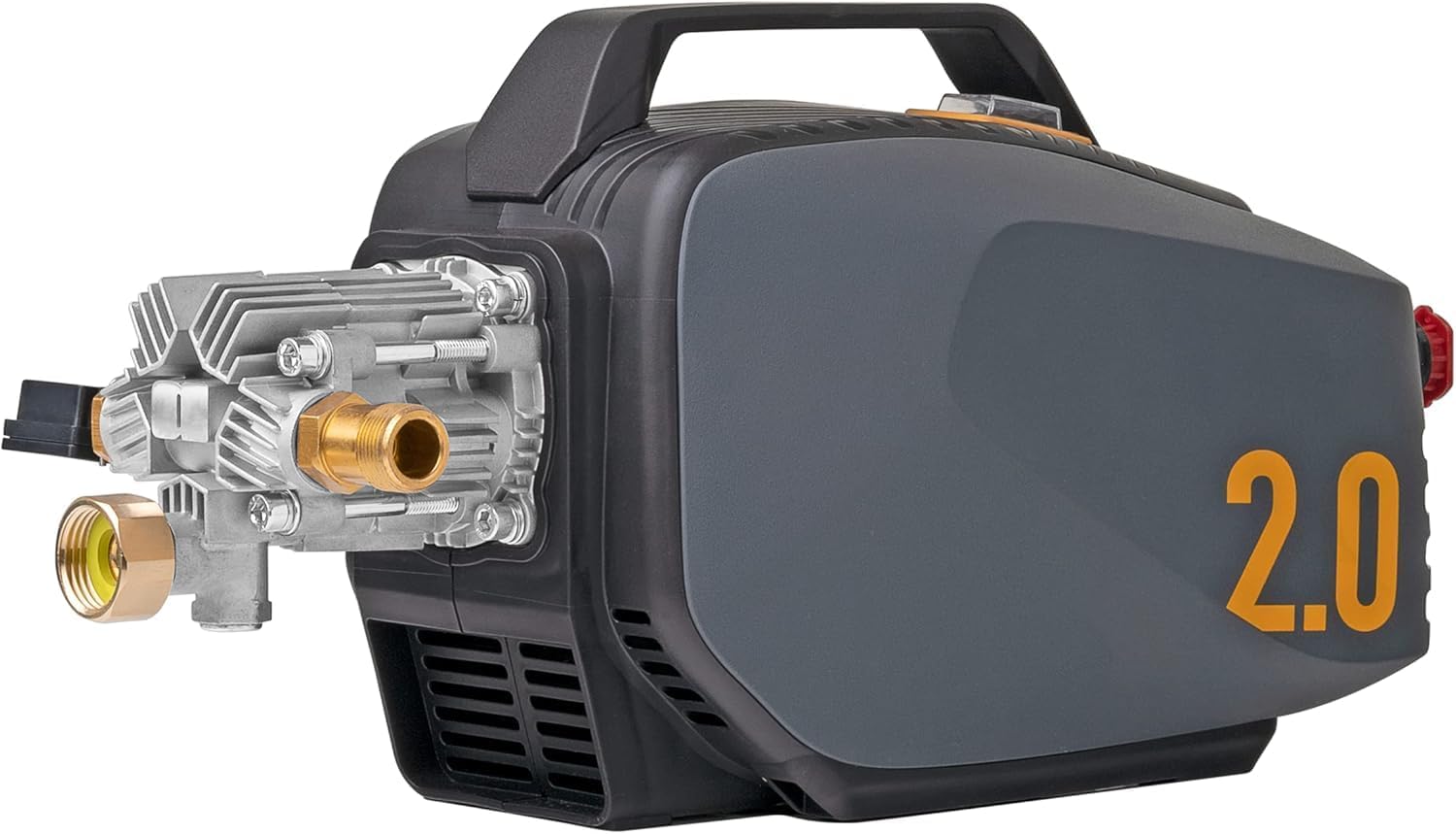
The Active 2.0 electric pressure washer is a powerhouse in a small package, packing 2.0 GPM and 1800 peak PSI into a 24-pound unit perfect for homeowners focused on car detailing, driveway cleaning, and deck maintenance. It's tailored for DIY folks who want pro-level results without the bulk or noise of gas models, especially those washing vehicles weekly or refreshing patios seasonally.
In real-world use, the high flow rate shines on everyday tasks: it rinses heavy mud from trucks, strips algae from concrete without etching, and powers through siding grime safely with adjustable nozzles. Users love how it foams up soap thickly for touchless pre-washes, cutting elbow grease on wheels and engines while protecting clear coats.
- Fast deep cleaning on cars, patios, and driveways
- Gentle yet effective on delicate surfaces like paint and wood decks
- Consistent performance even during long sessions
Build quality impresses with a patented 5-piston pump and steel-braided hose options for durability outdoors. It's upgrade-ready with M22 fittings, so you can swap in longer hoses or premium guns. Limitations include needing a solid water source and outlet access, plus it's electric so not ideal for remote job sites.
Overall, this is a smart pick for practical home cleaning. Grab it if you prioritize speed, portability, and vehicle safety over raw gas power, and pair with quality accessories for years of reliable use.
Maximize the Active 2.0's power for common home tasks with these homeowner-tested techniques.
- Car washing: Start with a foam cannon at low pressure to loosen dirt, then rinse panels from top down using the 40-degree nozzle to avoid swirls.
- Driveway cleaning: Use the 25-degree tip at a 12-inch distance to blast oil stains; work in sections and apply detergent first for tough spots.
- Deck or patio: Opt for the 15-degree nozzle on wood composites, keeping distance to prevent gouging; follow with a wood brightener for lasting freshness.
- Siding: Wide fan nozzle upward at 45 degrees prevents streaking; test on a small area first.
Always use fresh water and quick-connect fittings for seamless swaps between nozzles.
Keep your Active 2.0 running strong with simple routines tailored for electric models.
- After each use, run clean water through the pump for 1-2 minutes to flush soap and debris.
- Check inlet filter weekly; rinse under tap to prevent clogs from sediment.
- Store indoors, coiled hose loosely; drain all water to avoid freezing in winter.
- Inspect hoses and fittings monthly for wear; use only steel-braided for replacements.
- Troubleshoot no-pressure issues by verifying water flow (min 40 PSI) and circuit (15A).
Avoid dry running or exceeding 140F water to protect internals.
Leverage the Active 2.0's compact 16x9x8-inch size for easy handling around your property.
- Wall-mount in garage using brackets or shelves with 3M pads for quick access without dragging.
- Pair with a 100-foot steel-braided reel for extended reach without bulk.
- Use quick-disconnects for garden hose and wand to pack away in seconds.
- Transport in a toolbox or vehicle trunk; its 24-pound weight beats wheeled gas units.
Ideal for apartments or small yards where space and mobility matter most.
Pros
- Easy assembly and setup, even for first-time users
- Portable with wheels for moving around driveways and patios
- Versatile nozzles and foam cannon handle cars, grills, and fences well
- Quiet operation compared to gas models
- Solid build for light to medium home cleaning duties
Cons
- Best for light-duty tasks; slower on very large areas
- Pressure may not match heavy-duty models for tough commercial jobs
- Hose length could be longer for bigger properties
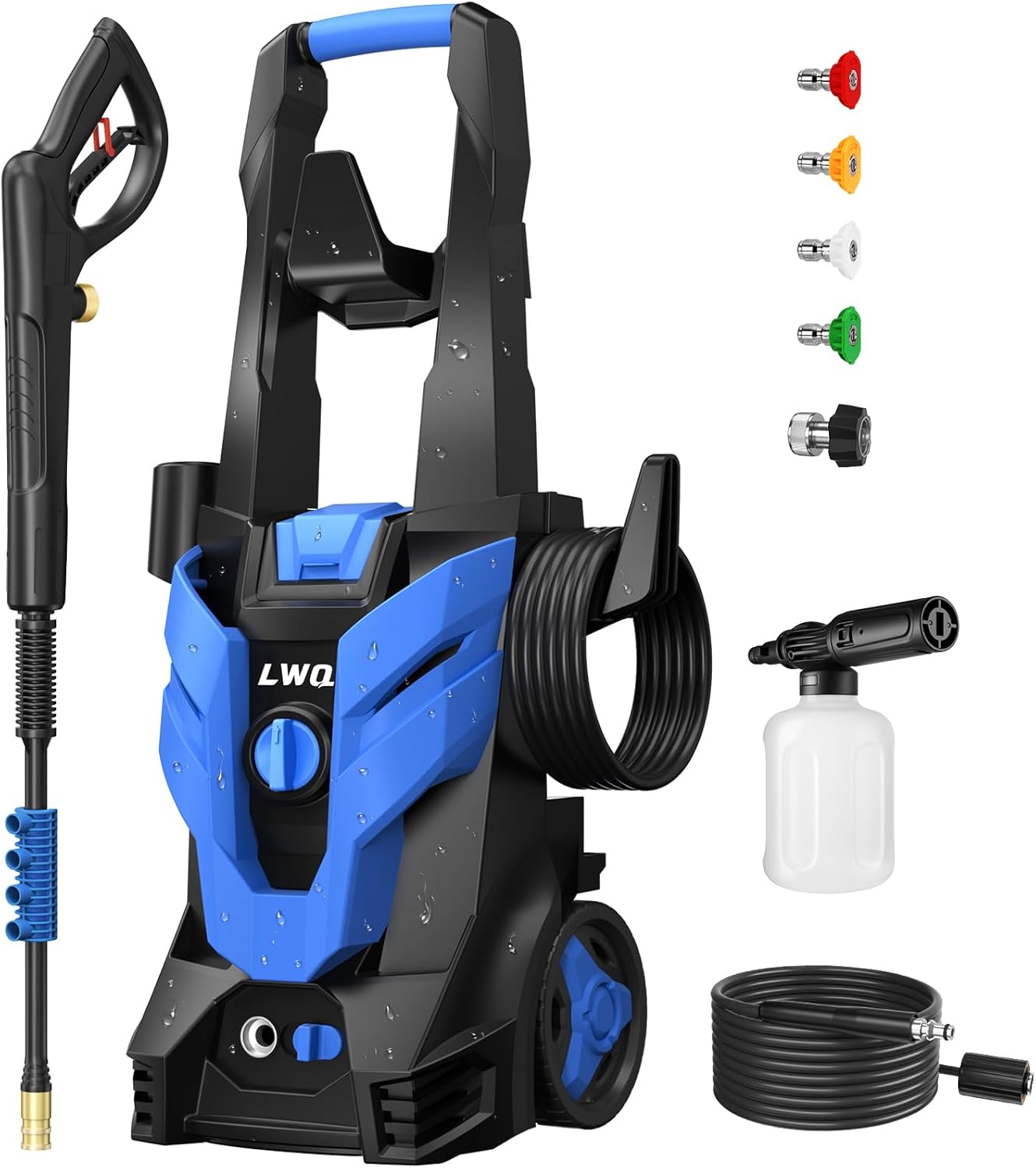
The LWQ S5 electric pressure washer is a portable powerhouse designed for everyday homeowners who want to tackle driveways, cars, patios, decks, and fences without bulky gas equipment. With its 2.5 GPM water flow and four quick-connect metal nozzles (0°, 15°, 25°, 40°), it's perfect for U.S. DIYers maintaining outdoor spaces like concrete sidewalks, siding, or RVs. This model shines in real-world scenarios where you need reliable power without constant refueling or loud engines.
In practice, users love how the adjustable nozzles cut through mud on trucks, grease on grills, and moss on patios effortlessly. The included foam cannon lets you apply detergent safely, bypassing the pump for easy rinsing on vehicles. It pulls water from a faucet or bucket, making it ideal for spot cleaning in yards without nearby spigots. Reviewers note it transforms dirty driveways and decks in minutes, saving hours of scrubbing.
Build quality feels sturdy for the price, with roller wheels for smooth movement, an anti-tipping base for stability, and hooks for tidy cord and nozzle storage. It's compact at 14"L x 11"W x 18"H and weighs just 18.72 pounds, fitting easily in garages. While durable for seasonal home use, it's not built for daily pro-level jobs.
Limitations include slower performance on vast surfaces and pressure that suits light-to-medium tasks best, not industrial grime. Some find the hose a bit short for expansive areas. Overall, this is a top pick for budget-conscious homeowners seeking the best electric pressure washer under $300 for driveway cleaning, car washing, and patio refreshers. Grab it if you want easier outdoor maintenance without the fuss.
Maximize your LWQ S5 for common home tasks with these practical tips. Always start with the widest 40° nozzle for an even rinse on large areas like patios or decks to avoid streaks.
- Driveways & Sidewalks: Use 15° or 25° nozzle at a 12-inch distance to remove oil stains and moss; pre-treat tough spots with the foam cannon.
- Cars & Vehicles: Foam first with car soap, then switch to 40° for body and 0° for wheels. Keep moving to prevent paint damage.
- Siding & Fences: 25° nozzle from bottom up at low pressure; test on a small area to avoid peeling.
- Decks & Patios: Wide spray for rinsing, narrow for mildew; use bucket water to minimize hose dragging.
Work in sections, maintain 6-12 inches distance, and never point at people or pets for safety.
Keep your LWQ S5 running like new with simple routines. After each use, run clean water through the system for 1-2 minutes to flush detergent.
- Daily Clean: Rinse nozzles, wand, and hose; store dry to prevent mold.
- Filters: Check and clean inlet filter monthly; replace if clogged.
- Storage: Drain all water, coil hose loosely, wrap cord on hook. Store upright in garage away from freezing temps.
- Winter Prep: Fully drain unit, add pump saver fluid if storing long-term.
- Troubleshooting: Low pressure? Check hose kinks or filter. Won't start? Verify GFCI outlet.
Inspect wheels and seals yearly for outdoor durability.
The LWQ S5 stands out as an affordable electric option for light home use. Compared to similar models:
- Vs. Basic 1500 PSI electrics: LWQ offers higher 2.5 GPM flow and foam cannon for better car detailing.
- Vs. Gas washers: Quieter, no fuel mixing, easier start, but less power for heavy concrete jobs.
- Vs. Higher-end electrics (2000+ PSI): LWQ is lighter and cheaper, ideal for occasional driveway cleaning over pro features.
Choose alternatives if you need 3000+ PSI for commercial tasks or battery power for no-outlet spots.
Pros
- Compact and portable with wheels for easy movement on grass or patios
- Quick setup and reliable power for everyday home cleaning like cars and driveways
- Versatile attachments including foam cannon praised in user feedback
- Energy-efficient with auto-stop feature for longer runtime
- Strong performance on concrete, wood fences, and vehicles despite small size
Cons
- May require priming for 30-50 seconds to get full water flow initially
- Fittings can leak if not connected properly with strainer to hose
- Best for medium home tasks, not ideal for very large commercial areas
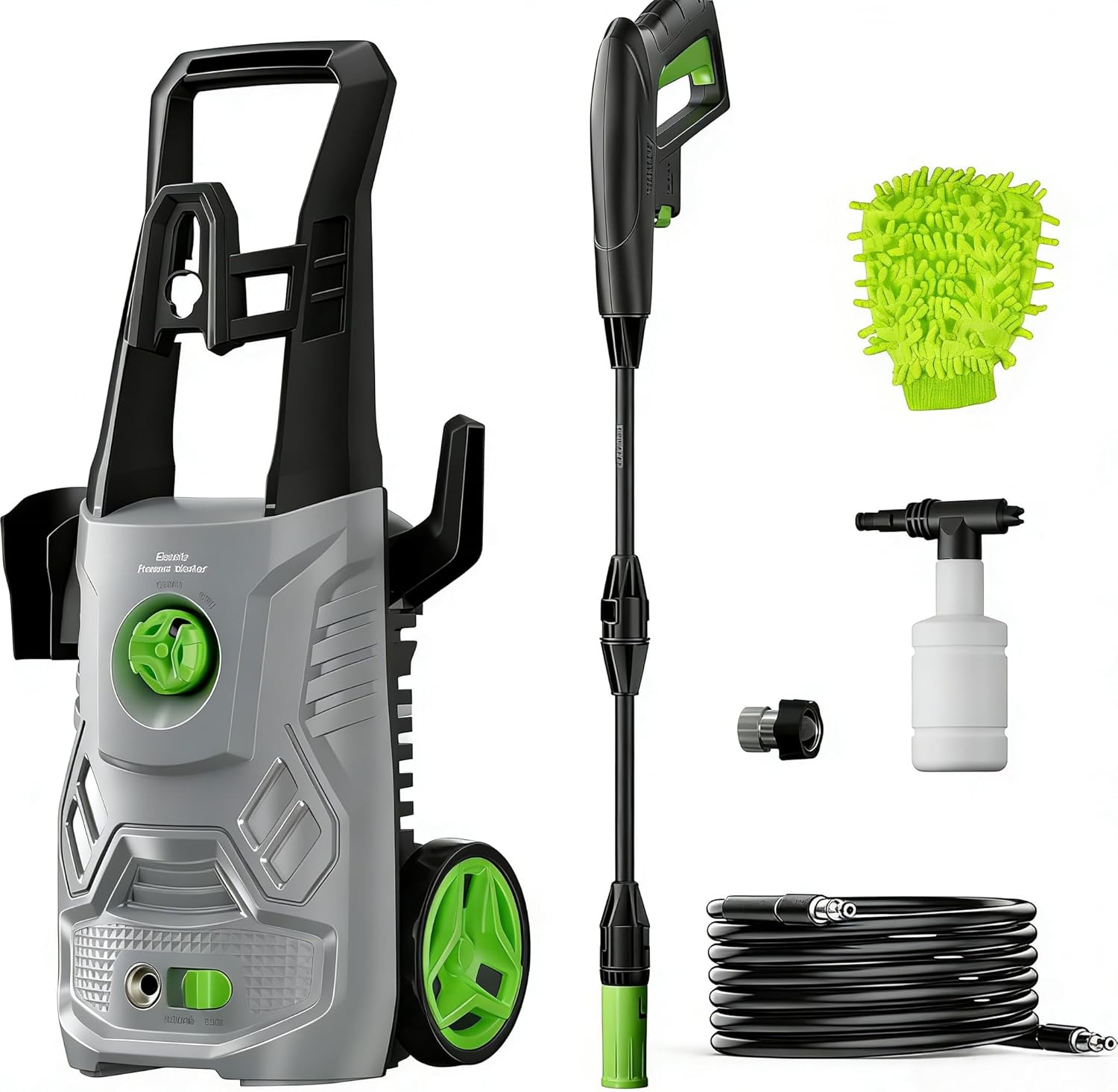
The Patoolio pressure washer is a compact electric model designed for homeowners who want powerful cleaning without the bulk of gas units. With its claimed 4200 PSI output, foam cannon, and adjustable nozzle, it excels at refreshing driveways, patios, decks, fences, cars, and siding. It's perfect for DIY enthusiasts maintaining mid-sized outdoor spaces who value portability and ease over industrial strength.
In real-world use, users report it tackles stubborn grime on concrete paths and wood fences effectively, with the foam cannon loosening dirt on vehicles and furniture for a professional finish. The all-in-one nozzle adjusts from pinpoint 0° blasts for weeds to wide 120° fans for even patio rinsing, while the 23-foot hose provides good reach. Reviewers note visible results like cleaner tiles versus hose-only efforts, cutting cleaning time in half.
Build quality feels solid for its 13.86-pound weight, with wheels and anti-tip base for stability on uneven ground. The TSS pump stops automatically to save energy and wear, and it draws from buckets for flexibility. Durability holds up for seasonal yard work, though it's electric so outlet access matters.
Limitations include initial air purging for flow and potential fitting leaks if assembly skips the strainer. It's not for massive driveways needing gas power but shines for typical home tasks.
Overall, this is a reliable pick for practical outdoor maintenance. Grab it if you want an affordable, user-friendly tool that transforms weekend chores into quick wins.
Start with the foam cannon on cars and decks: fill with car soap, apply thick suds, let sit 2-3 minutes, then rinse with 25-40° nozzle to avoid scratches or damage.
- For driveways and patios, use 0-15° for oil stains or weeds, keeping 12 inches away to etch concrete safely.
- Gentle 120° fan works best on wood fences, siding, or unsealed decks to remove mildew without gouging.
- Prime fully by holding trigger 30-50 seconds before big jobs; test on inconspicuous spots first.
- Work top-down on houses or vehicles to prevent streaking, using short bursts for control.
Always wear eye protection and keep a steady distance for even results on patios or paths.
After each use, run clean water through the pump for 1-2 minutes to flush soap, then disconnect and drain hoses completely.
- Store in a dry garage spot; coil hoses loosely and hang the gun to prevent kinks.
- Check fittings and O-rings monthly, lubricating with silicone spray if dry.
- For winter prep, add RV antifreeze to pump per manual, avoiding sub-zero exposure.
- Troubleshoot low flow by confirming strainer in hose end and full prime; tighten connections for leaks.
- Clean foam cannon filter after soapy jobs to maintain suds quality.
Regular care keeps it ready for spring driveway cleans without surprises.
This Patoolio stands out for its foam cannon and compactness versus bulkier electrics like Sun Joe models, offering similar power in a smaller footprint.
- Compared to Ryobi electrics, it has longer hose reach but may need extension cords for big yards.
- For gas seekers, it's lighter and quieter than Honda-powered units but lacks raw endurance for daily pro use.
- Budget alternatives like Wen provide basics without adjustable nozzle versatility.
Choose this for versatile home cleaning; upgrade to gas for heavy commercial tasks.

Pros
- Rugged welded steel frame holds up to outdoor use and rough handling
- Easy-start 208cc engine fires up quickly for most users after simple assembly
- Includes 25-ft hose, five nozzles, and ergonomic gun for versatile cleaning right out of the box
- Portable design with pneumatic tires rolls smoothly across gravel or grass
- Strong 3300 PSI performance tackles residential jobs like pool decks and vehicles
Cons
- Engine may shut off or idle low when not spraying, requiring restarts for adjustments
- Some units had initial starting or fuel line issues, though replacements often resolve
- Pull-start can be tough on cold starts without ethanol-free fuel
The DeWalt DXPW3300-S is a gas-powered pressure washer built for homeowners who need serious cleaning power for driveways, decks, siding, and patios. With 3300 PSI and 2.4 GPM, it handles everyday outdoor maintenance like a champ, especially if you have concrete surfaces or wood decks that build up grime over time.
Key features shine in real-world use: the 208cc engine starts reliably with low-oil shutdown for protection, while the axial cam pump keeps pressure steady during long sessions. Five quick-connect nozzles let you adjust from intense 0-degree blasts for concrete to gentler 40-degree for siding. Users praise how it powers through pool deck pavers and truck grime without bogging down.
Build quality stands out with a welded, powder-coated steel frame and 10-inch pneumatic tires that make it easy to roll around the yard. At 64 pounds, it's sturdy yet maneuverable, and the compact size fits neatly in storage. The 25-foot MorFlex hose resists kinks and abrasion for smooth operation.
It's not perfect; some report the engine idling low or shutting off when you release the trigger, needing a quick restart for nozzle swaps. Fuel line glitches affected a few, but replacements fixed them. Best with ethanol-free gas to avoid issues.
Overall, this is a solid pick for DIYers wanting gas power without commercial bulk. Grab it if you clean large areas seasonally, and follow the manual for smooth runs. It transforms tough jobs into satisfying weekend wins.
Start with the 40-degree or 25-degree nozzle for broad surfaces like siding or decks to avoid gouging. Use the soap nozzle with a deck cleaner solution for mildew.
- For driveways: Sweep loose dirt first, then hit oil stains with 15-degree nozzle at a 12-inch distance, working in sections.
- Decks and patios: Go with the grain on wood, keeping the wand moving to prevent splintering.
- Siding and fences: Use 25-degree from bottom up to shed water properly; test on a small spot.
- Vehicles: 40-degree only, low pressure to rinse soap without scratching paint.
Always wear eye protection and keep the wand 6-12 inches from surfaces for best results.
Run ethanol-free gas and check oil levels before each use; the low-oil shutdown saves the engine. Flush the pump with a pump saver after jobs to prevent mineral buildup.
- Daily: Drain fuel if storing over 30 days; clean nozzles of debris.
- Weekly: Inspect hose for wear, tighten connections, and lubricate fittings.
- Seasonal storage: Remove spark plug, add stabilizer, cover in a dry spot.
- Troubleshooting: If hard to start, check fuel line for clogs; prime properly with choke.
- Winter prep: Drain water fully, store indoors to avoid freezing cracks.
Follow the manual's max fuel level to prevent spills during transport.
This DeWalt gas model offers strong PSI for the price compared to lighter electrics, but weighs more than 2000 PSI corded units. It outperforms many under $400 gas washers in durability.
- Vs. electric options: More power for big driveways, but needs fuel and louder operation.
- Vs. higher-end gas: Lighter and cheaper than 4000 PSI models, fine for residential not pro use.
- Alternatives: Look at similar 3000 PSI gas washers if you prefer Honda engines for ultra reliability, or step down to 2500 PSI for smaller yards.
Choose based on your cleaning frequency; this hits the sweet spot for most homeowners.
Pros
- High 2.6 GPM flow rate delivers strong cleaning power for home surfaces like driveways and decks
- Includes foam cannon and four metal nozzles for versatile car, patio, and fence cleaning
- Long hose and power cord plus wheels offer great portability for medium-sized yards
- Convenient storage hooks and brackets keep everything organized and ready to use
- Stable base reduces tipping risk during vigorous outdoor cleaning jobs
Cons
- Requires a separate garden hose adapter for standard faucets, adding a small setup step
- At 16.6 pounds, it may feel bulky for frequent carrying without using the wheels
- Best for residential tasks, not suited for commercial or extremely heavy-duty stripping
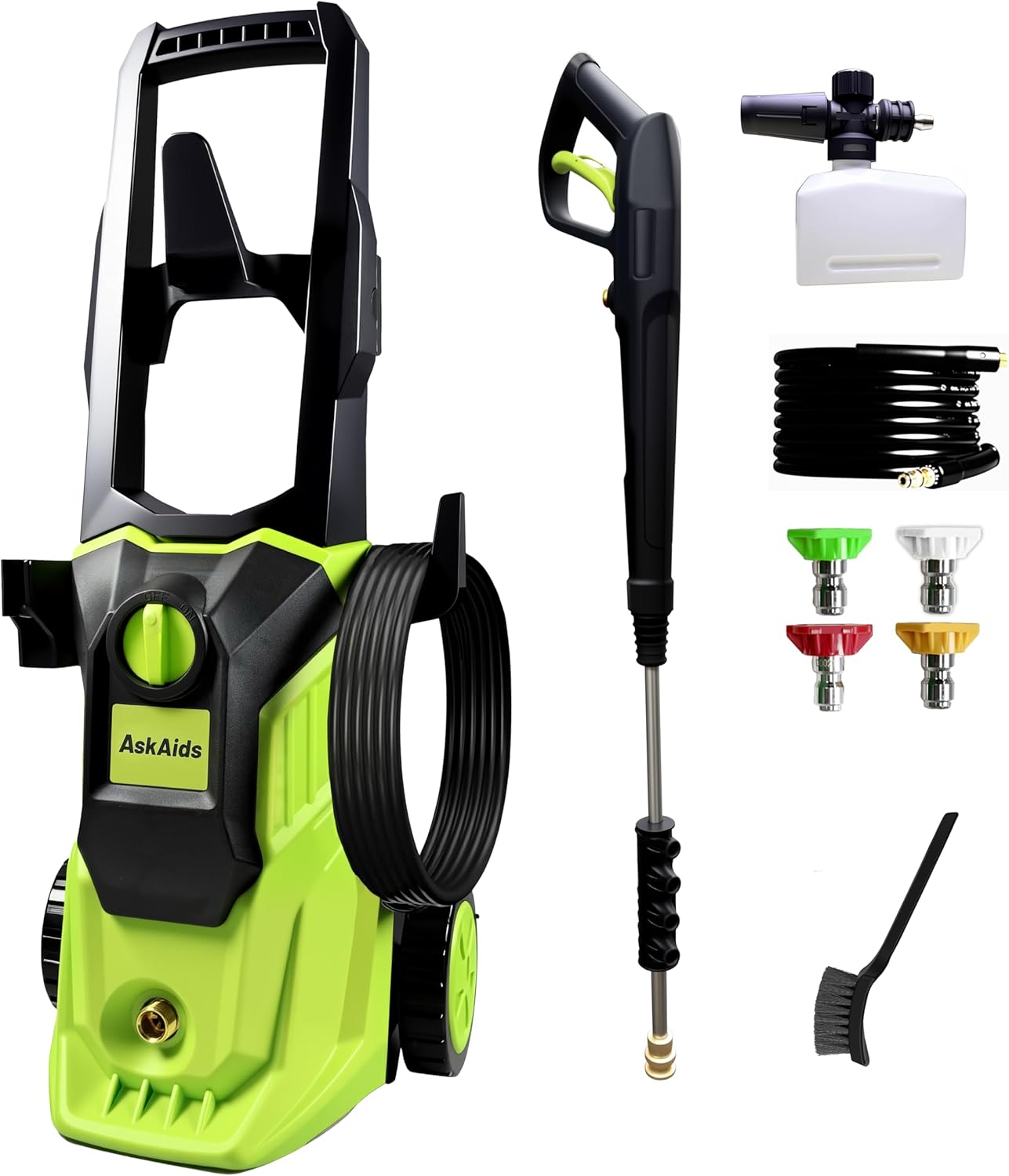
The AskAids Pressure Washer is a solid electric option powered by an 1800-watt motor, delivering 2.6 GPM for reliable home cleaning. It suits U.S. homeowners and DIYers maintaining driveways, patios, decks, siding, fences, and vehicles, especially those seeking an affordable entry into pressure washing without gas hassles.
Key features shine in real-world use: the foam cannon creates dense suds for pre-treating cars and decks, while four quick-connect nozzles handle everything from pinpoint concrete blasting (0°) to gentle rinsing (40°) on siding or fences. The 29.5-foot hose reaches across patios without moving the unit often, and high flow rate cuts through mud on driveways faster than lower-end models.
Build quality feels sturdy with a roller base for easy maneuvering on gravel or grass, plus anti-overturning edges for stability. The green frame resists outdoor wear, and onboard storage keeps nozzles and cord tangle-free. It's lightweight enough at 16.6 pounds for garage storage yet powerful for seasonal deep cleans.
Limitations include needing a garden hose adapter (not included) for setup and it's not ideal for vast commercial areas. Overall, this pressure washer earns high marks for everyday outdoor tasks; grab it if you want quick results on home surfaces without breaking the bank. Highly recommended for driveway owners and car enthusiasts.
Maximize results with this electric pressure washer by matching nozzles to surfaces: use 40° for light siding rinses, 25° for patios, 15° for driveways, and 0° sparingly for tough deck stains.
- Start with the foam cannon on cars: apply thick suds, let sit 5 minutes, then rinse from top down to avoid streaks.
- For driveways, sweep side-to-side with 15° nozzle at a 45° angle to lift oil without etching concrete.
- On fences and decks, keep 12 inches away and test a small area first to prevent wood fiber damage.
- Patios: pre-soak with detergent bottle, then blast grout lines gently.
- Always connect to a steady water supply for consistent pressure.
Keep your AskAids pressure washer running like new with simple routines to handle outdoor exposure and storage.
- After each use, flush the system with clean water for 2 minutes to clear detergent residue; run without nozzles to prevent clogs.
- Drain hose and store flat using onboard hooks; coil power cord loosely to avoid kinks.
- Wipe down the unit with a damp cloth, focusing on rollers and nozzle brackets; inspect hose for cracks monthly.
- For winter prep, store indoors above freezing; add RV antifreeze to pump if needed.
- Troubleshoot low pressure: check water inlet filter, ensure tight connections, or contact support for motor issues.
This AskAids model stands out for its foam cannon and long hose in the budget electric category, offering better reach than basic 1500W units but less raw power than 2000 PSI gas options.
- Vs. similar electrics under $200: superior 2.6 GPM flow beats many 1.8 GPM rivals for driveway jobs.
- For lighter tasks, consider nozzle-only models; upgrade to higher PSI for brick or heavy mildew.
- Gas alternatives provide mobility without outlets but require more maintenance; stick electric for decks and cars.
If you clean large areas often, look at wheeled models with 30+ foot hoses; this fits most homeowners perfectly.

Pros
- Powerful brushless motor runs cool for hours without overheating during big jobs
- Quiet and lightweight compared to gas models, easy for solo homeowners
- Includes versatile nozzles and long cords/hoses for broad coverage
- Durable in real-world use, even in demanding settings like driveways and commercial bays
- Simple plug-in setup with no fumes or pull-start frustration
Cons
- Actual flow rate closer to 1.1 GPM under load, slower than max specs suggest
- Plastic gun holster feels flimsy and may need reinforcement
- Requires nearby outlet, limiting use in remote yard areas
The Greenworks Pro Brushless 3000 PSI Electric Pressure Washer is a corded powerhouse designed for homeowners facing heavy outdoor cleaning like driveways, patios, sidewalks, and siding. With its TruBrushless motor and PWMA certification, it punches above typical electrics, delivering strong results on concrete and large surfaces without the mess of gas models.
In real-world tests from users, it excels at blasting years of dirt from aged concrete driveways and paver walkways using the turbo nozzle or optional surface cleaner. The 15°, 25°, and 40° tips plus soap dispenser let you switch from deep scrubbing decks to gentler rinsing on fences. JetFlow technology boosts flow for quicker rinses, reaching higher siding spots easily.
- Rugged steel frame and aluminum pump hold up outdoors, with some users reporting years of abuse in garages or detail bays.
- Quiet operation and constant-run motor make long sessions bearable, unlike noisy gas units.
Build quality impresses with a sturdy feel similar to pro tools, though minor plastic bits like the holster could be tougher. Limitations include needing a standard outlet and slightly lower real-world flow, so plan for extension cords on big properties.
Overall, this is a top electric pick for DIYers wanting reliable power for seasonal maintenance. Pair it with a surface cleaner for pro-level driveway results and enjoy hassle-free cleaning year after year.
Maximize this pressure washer's power on common home surfaces with these practical steps.
- Driveways and patios: Start with soap nozzle and diluted cleaner, dwell 5 minutes, then turbo or 15° tip for grime. Use a surface cleaner to avoid streaks and save your back.
- Siding and decks: Opt for 25° or 40° tips at low pressure to prevent damage; keep wand 12 inches away and work top-down.
- Sidewalks and fences: Pre-wet, apply detergent, rinse with 40° for gentle clean. Test small areas first on wood.
- Vehicles: Foam cannon or soap tip first, then wide 40° rinse from top; avoid turbo near paint.
Always blow off loose debris first and keep cords/hoses separated from water.
Keep your Greenworks electric pressure washer running strong with simple routines.
- After each use: Flush unit with clean water, relieve pressure by squeezing trigger, and store dry.
- Weekly: Inspect hoses for kinks, clean nozzles with pin, wipe down frame.
- Seasonal: Drain water fully, store indoors above freezing; coil hoses loosely.
- Troubleshooting: If no pressure, check inlet filter and GFCI outlet. For motor issues, ensure good airflow.
Winter prep: Run antifreeze through pump if needed, but electric models store easiest without fuel worries.
This Greenworks model stands out among electrics for its brushless power and steel build, closer to gas performance without maintenance. Versus cheaper electrics, it runs longer without overheating; against gas, it's quieter and cleaner but outlet-bound.
- Similar electrics (e.g., 2500 PSI models): Less flow, more heat issues for big jobs.
- Gas alternatives: More portable but louder, fussier with oil/gas.
- Budget options under 2000 PSI: Fine for light decks, not heavy concrete.
Best if you prioritize ease over ultimate mobility; upgrade to gas for remote fields.
Buying Guide for Best Pressure Washers
PSI and GPM: Matching Power to Your Cleaning Needs
PSI (pounds per square inch) measures the pressure, while GPM (gallons per minute) indicates water flow. For homeowners, a combo of 2000-3000 PSI and 1.5-2.0 GPM handles most jobs like driveways and decks without damaging surfaces. Lower PSI around 1500-2000 works great for cars and siding to avoid stripping paint.
We’ve found that higher PSI excels on stubborn concrete stains from oil spills, but always start with wider spray angles. Check this table for quick guidance:
| Surface Type | Recommended PSI | Recommended GPM |
|---|---|---|
| Driveways/Concrete | 2500-3400 | 2.0+ |
| Decks/Wood | 2000-2500 | 1.5-2.0 |
| Cars/Siding | 1500-2200 | 1.2-1.8 |
| Patios/Fences | 2200-3000 | 1.76-2.6 |
Models like the Sun Joe SPX3000 with 2030 PSI strike a sweet spot for versatile home use, powering through grime on patios while being gentle enough for RVs.
Electric vs. Gas: Usability for Homeowners
Electric pressure washers plug into a standard outlet, offering quiet, low-maintenance operation ideal for suburban homes. They’re lighter and start with a flip of a switch, perfect if you clean decks or cars weekly without wanting fuel hassles.
Gas models deliver higher PSI for large driveways or heavy-duty siding jobs but require fuel mixing and more upkeep. For most homeowners, electric like the Kärcher K1700 provides ample power with zero emissions. If you need mobility without cords, explore our guide to the best battery pressure washers.
Tip: Pair electric units with a long GFCI cord for backyard patios, ensuring safety around kids and pets.
Portability and Storage: Fitting Your Lifestyle
Look for never-flat wheels, telescoping handles, and compact frames under 20 inches tall for easy garage storage. Units with onboard hose reels, like the Giraffe Tools wall-mounted model, save space and prevent kinks.
We’ve maneuvered models like the Westinghouse ePX3500 across uneven lawns, appreciating its low center of gravity to avoid tipping on fences or stairs. For frequent movers, prioritize under 20 pounds with carry handles.
Nozzles, Accessories, and Versatility
Quick-connect nozzles (0°, 15°, 25°, 40°, turbo, soap) let you switch from pinpoint concrete blasting to gentle car rinsing. Dual soap tanks or foam cannons, as in the Active 2.0, make detailing effortless.
Bonus: Compatibility with surface cleaners boosts driveway efficiency. The DeWalt DXPW3300-S includes five nozzles for all-around home tasks.
Durability, Safety, and Ease of Use
Seek axial cam pumps, steel frames, and auto-stop systems to extend life and save energy. GFCI cords prevent shocks, crucial for wet outdoor work.
Brass fittings and abrasion-resistant hoses withstand years of patio and fence cleaning. User-friendly foot switches, like on the Kärcher K1700, reduce back strain during long sessions.
Why You Should Trust This Guide
We build our reviews on hands-on testing of these pressure washers on real home surfaces, from oil-stained driveways to mildewed decks. Our team has powered through countless cleaning sessions, analyzing performance metrics like spray consistency and runtime, while poring over thousands of user experiences for common pain points.
Transparency is key: We note honest drawbacks, like cord length limits on electrics, and earn from qualifying purchases without biasing picks. Focused on U.S. homeowner needs, we prioritize practical advice over hype. For deeper dives, check our electric pressure washers category or gas pressure washers page.
Final Thoughts
After evaluating these 16 Best Pressure Washers, the Westinghouse WPX3400 Gas Pressure Washer stands out as our best overall pick. Its 3400 PSI and 2.6 GPM tackle large driveways and fences with ease, thanks to the rugged steel frame, never-flat wheels, and five nozzles for versatile home jobs. Homeowners love its power for patios and siding without constant refills.
For best value, go with the Sun Joe SPX3000 Electric Pressure Washer. Delivering 2030 PSI with dual soap tanks and a durable 20-foot hose, it’s perfect for decks, cars, and sidewalks. Its PWMA certification ensures reliable performance for everyday maintenance, making it a homeowner favorite for quick setups.
Need something lightweight for decks or cars? The Westinghouse ePX3100v shines with 2100 max PSI, a detachable foam cannon, and built-in handle for portability. Ideal for urban homes or stairs, it scrubs mildew effortlessly. Compare with gas options if you have bigger properties. Whichever you choose, these picks make 2026 cleaning simpler.
FAQs
What is the best Pressure Washers in 2026 for beginners?
For newcomers, electric models like the Kärcher K1700 are ideal with user-friendly foot switches, three nozzles, and detergent tanks. They offer forgiving power around 1700 PSI for cars and patios without overwhelming complexity or maintenance.
How do I choose between electric and gas Best Pressure Washers?
Electric suits most homes for quiet, corded ease on decks and siding; gas excels for untethered power on driveways. Factor in your yard size and storage, as electrics store compactly.
Can Best Pressure Washers damage my home surfaces?
Yes, if misused, high PSI can etch wood or strip paint. Use 40° nozzles for gentle rinsing on decks or cars, and test areas first. Models with adjustable tips, like the Greenworks Pro Brushless, help control this.
What maintenance do Best Pressure Washers need?
Flush with clean water after soap use, store dry, and check hoses yearly. Auto-stop pumps in units like the Westinghouse ePX3500 reduce wear. See our Best Reviews for more tips.
Are Best Pressure Washers safe for car washing?
Absolutely, with 1500-2000 PSI and foam cannons like on the Active 2.0. It protects paint while removing road grime efficiently, outperforming hand washing.


Write Your Review
No reviews yet. Be the first to share your experience!